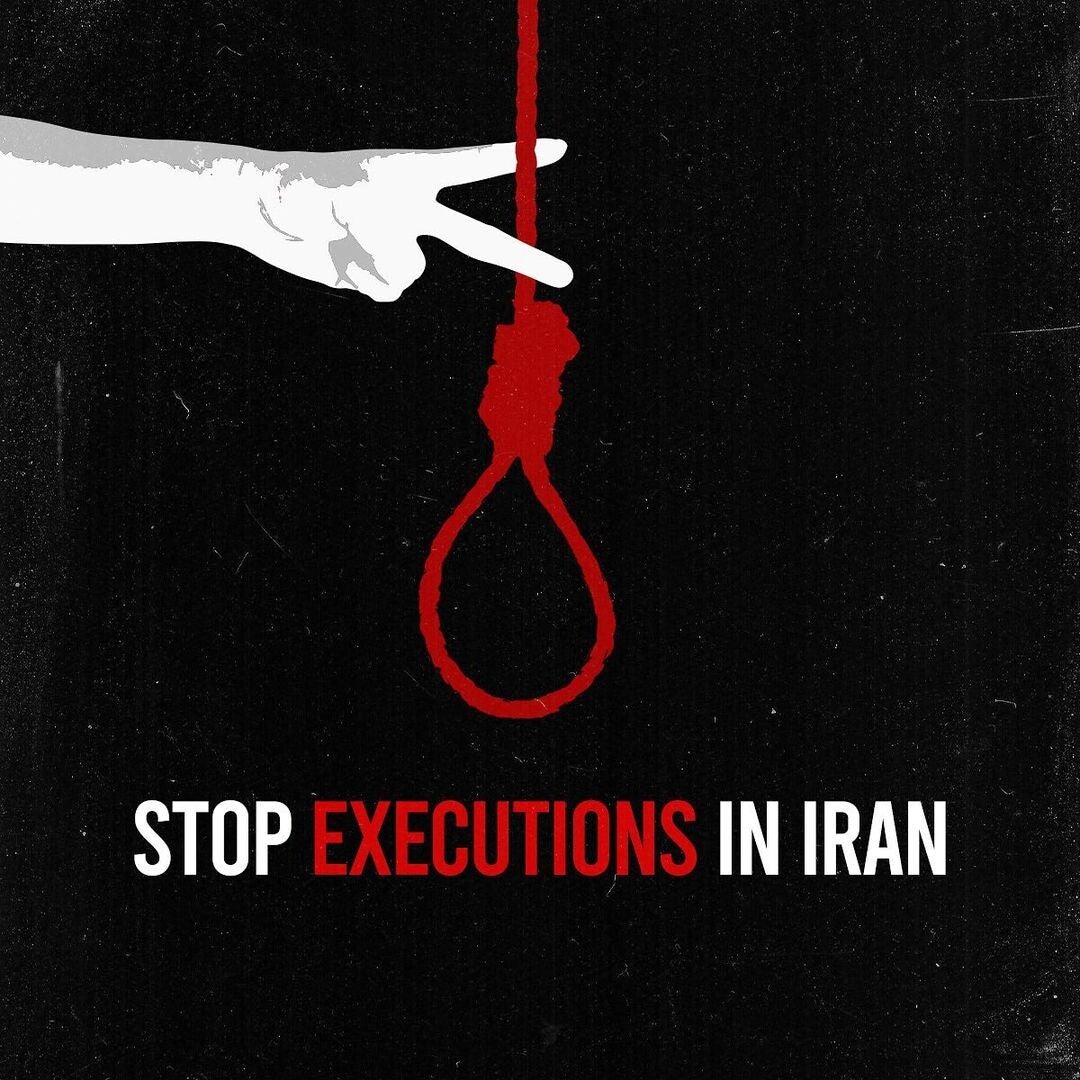
Iran executed over 2,000 people in past year

  • families are sometimes not contacted until after the sentence is carried out
  • confessions in Iran are obtained under torture and intimidation
  • inmates are not given proper representation
  • charges are made up or exaggerated 
  • political dissent often ends in execution
  • public executions are carried out in order to frighten the people into submission
  • crane hangings can result in a slow death of up to 20 minutes while family and friends look on.
  • the bodies of the inmates are not always released in a timely manner in order to punish the family of the deceased.

Atefeh Tajik,

Grave concerns for the life of Atefeh Tajik, detained at Varamin Prison, who has been denied cancer treatment and medicationAccording to published reports, the health of Atefeh Tajik, 48, who has bone cancer and is being held at Varamin Prison, has deteriorated significantly. The interruption of her treatment and the lack of access to essential medications are putting her life in serious danger.The progression of the disease has reportedly left her unable to eat. She is also said to be suffering from repeated vomiting and memory problems. Despite this critical situation, her specialized medical treatment reportedly remains suspended.In response to the authorities’ neglect of her medical condition, several prisoners are reportedly considering going on a hunger strike. According to available information, they have allegedly been threatened with solitary confinement.

Read more »

At risk of execution: Arghavan Fallahi

Arghavan Fallahi, a 24-year-old  political  prisoner held in Evin  Prison, has been sentenced to death by Branch 15 of the Tehran Revolutionary Court, presided over by Judge Abolghasem Salavati, on charges of Baghi (armed rebellion against the Islamic state).

Read more »